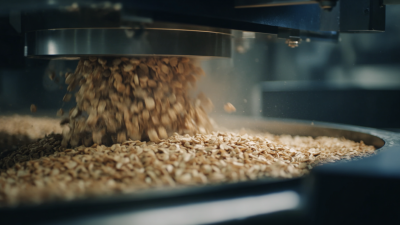
So, China has really become a big player when it comes to industrial food-processing equipment — especially for frying. In this guide, we're going to look at ten of the leading Chinese manufacturers of Frying Production Line systems. And rather than just making promotional claims, we'll stick to practical evidence.
When you're evaluating this stuff, it's not just about engineering experience, processing capacity, product consistency, and after-sales support. You also want to look at things like fryer design, oil filtration, conveyor control, heating methods, and how easy it is to clean. Trust me, those details really show up on an actual factory floor. Keeping oil temperature steady can help protect color, texture, and yield. And automatic filtering? It can cut down on residue during those long shifts. Honestly, it's often the small design choices that end up making a big difference in maintenance.
So, the manufacturers we pick out work with snack, potato, poultry, seafood, and prepared-food producers. Their equipment can range from small semi-automatic units to full continuous production lines. When we compare them, we look at customization options, materials, control systems, installation services, and any documented export experience. If they're making serious claims, we want factory visits, technical drawings, customer references, and test-run records to back them up. Honestly, a polished website alone just isn't enough.
Honestly, performance isn’t just about the machine. What you’re putting through it matters too—product formulation, moisture content, oil type—and let’s not forget operator training. It’s an easy thing to miss. Some suppliers can look pretty much the same at first, but once you dig into energy use, spare-part availability, and sanitation procedures, the differences start to show. So I’d treat the ranking as a handy guide, not the final word. After all, every factory has its own needs. Before you buy, it's a good idea to ask for samples, capacity tests, and written specs. Honestly, even seasoned buyers can overlook hidden costs. But if you take the time to compare options carefully, you'll reduce that risk—and that usually leads to a safer, more reliable investment.

Frying Line Process Stages and Typical 150–190°C Operating Temperatures
China Top 10 Frying Production Line Manufacturers
A frying line usually begins with feeding, washing, peeling, cutting, and surface-water removal. Each stage affects the final texture. Excess moisture can cool the oil sharply and increase splashing. After preparation, products enter the fryer through a controlled conveyor. Many industrial lines operate between 150°C and 190°C, depending on product size, moisture, and desired color. Thin slices may need 150–165°C, while thicker pieces often require 170–190°C. The exact setting should come from trials, not assumptions.
Inside the fryer, oil circulation must remain even across the full chamber. Temperature sensors should be checked against independent instruments. Oil filtration removes crumbs that can darken the product and create unwanted flavors. After frying, the line may include de-oiling, cooling, seasoning, inspection, and hygienic packaging. Residence time matters as much as temperature. A hotter bath does not always mean faster or better frying. It may produce a dark surface while the center stays soft.
Tips: Keep a written record of oil temperature, frying time, product moisture, and filter-cleaning intervals. Check several pieces from the conveyor, not only one. No setting is perfect. Operators may need to adjust airflow, belt speed, or oil level during production. Small differences in raw materials can change results, so regular validation remains necessary.
Ranking China’s Top 10 Manufacturers by Capacity, Technology, and Service
China Top 10 Frying Production Line Manufacturers
Ranking China’s top ten frying-line manufacturers requires more than factory size. Capacity, engineering depth, and after-sales service should carry equal weight. Grand View Research estimates the global food-processing equipment market will grow at about 5% annually through 2030. That growth rewards suppliers that deliver stable throughput, not impressive brochures.
A practical ranking should compare hourly output, oil-temperature stability, energy use, and changeover time. Leading Chinese manufacturers typically offer systems ranging from 300 to 2,000 kilograms per hour, depending on product and process design. Their strongest projects include automatic feeding, filtration, cooling, and clean-in-place functions. PMMI’s 2024 industry outlook highlights labor efficiency and automation as major investment drivers. Service evidence matters too: spare-parts response, remote diagnostics, installation training, and documented acceptance tests should be scored separately. Capacity alone can mislead.
Tips: Request a three-hour production trial using your actual product. Record oil consumption, moisture variation, and downtime. Ask for customer references in a similar climate. ISO 22000 alignment is useful, but certification does not replace hygienic design. Review welding quality, access doors, drainage, and control-system records. A smaller supplier may outperform a larger one when commissioning support is faster. That remains an uncomfortable weakness in many rankings. Reports provide direction, yet factory visits reveal the truth.
China Top 10 Frying Production Line Manufacturers - Ranking China’s Top 10 Manufacturers by Capacity, Technology, and Service
Comparative industry benchmark based on production capability, frying-line engineering, automation, and service performance.
| Rank |
Anonymous Manufacturer Profile |
Typical Product Focus |
Rated Throughput
(kg/h) |
Typical Line Length
(m) |
Temperature Control
(±°C) |
Automation
Level |
Oil Filtration
Configuration |
CIP Capability |
International Service
Coverage |
Typical Lead Time
(weeks) |
Capacity
Score / 100 |
Technology
Score / 100 |
Service
Score / 100 |
Overall
Score / 100 |
| 1 |
Manufacturer Profile 01 |
Potato snacks, extruded snacks, pellets |
800–2,000 |
18–35 |
±1.0 |
Advanced |
Continuous multi-stage |
Full-line CIP |
High |
16–24 |
96 |
94 |
92 |
94 |
| 2 |
Manufacturer Profile 02 |
Potato chips and continuous frying systems |
600–1,800 |
16–32 |
±1.2 |
Advanced |
Continuous fine filtration |
Partial to full |
High |
18–26 |
92 |
93 |
91 |
92 |
| 3 |
Manufacturer Profile 03 |
Snack pellets, crackers, coated products |
500–1,500 |
15–30 |
±1.5 |
Advanced |
Two-stage continuous |
Full-line CIP |
High |
18–28 |
89 |
91 |
89 |
90 |
| 4 |
Manufacturer Profile 04 |
Industrial potato chip and snack lines |
400–1,300 |
14–28 |
±1.5 |
Advanced |
Continuous filtration |
Partial to full |
Medium–High |
20–30 |
86 |
88 |
87 |
87 |
| 5 |
Manufacturer Profile 05 |
Small and medium-scale snack production |
200–800 |
10–22 |
±2.0 |
Intermediate |
Batch or continuous |
Optional |
Medium–High |
14–24 |
82 |
84 |
86 |
84 |
| 6 |
Manufacturer Profile 06 |
Fried dough, convenience foods, snack products |
250–900 |
10–24 |
±2.0 |
Intermediate |
Single or dual-stage |
Optional |
Medium |
16–26 |
80 |
82 |
83 |
82 |
| 7 |
Manufacturer Profile 07 |
Custom frying systems for regional processors |
150–700 |
8–20 |
±2.0 |
Intermediate |
Standard continuous |
Optional |
Medium |
14–22 |
77 |
79 |
82 |
79 |
| 8 |
Manufacturer Profile 08 |
Batch frying and flexible multi-product lines |
100–500 |
6–16 |
±2.5 |
Standard |
Batch filtration |
Manual-assisted |
Medium |
12–20 |
73 |
75 |
80 |
76 |
| 9 |
Manufacturer Profile 09 |
Compact frying and seasoning production lines |
80–400 |
5–14 |
±2.5 |
Standard |
Basic continuous |
Manual-assisted |
Medium |
10–18 |
70 |
72 |
78 |
73 |
| 10 |
Manufacturer Profile 10 |
Entry-level and pilot-scale frying equipment |
50–250 |
4–10 |
±3.0 |
Basic |
Manual or batch |
Manual cleaning |
Low–Medium |
8–16 |
65 |
66 |
75 |
68 |
Scoring basis: Overall score is calculated using a weighted benchmark of capacity (35%), technology (35%), and service capability (30%).
Figures are representative engineering ranges for comparable Chinese frying-production-line suppliers. Actual throughput, configuration, delivery time, and service coverage vary according to product formulation, equipment options, factory layout, and project scope.
Throughput Benchmarks: 0.5–5 t/h for Continuous Frying Production Lines
China’s top 10 frying production line manufacturers are often compared by rated throughput, yet capacity alone can mislead. Continuous frying lines commonly span 0.5 to 5 t/h. A 0.5 t/h system suits smaller snack plants and frequent product changes. Lines near 5 t/h require stable raw-material supply, stronger oil filtration, and carefully planned cooling and packing. During factory evaluations, verify whether capacity means wet feed, finished product, or peak output. These are different measurements. Ask for test data using your recipe, moisture level, slice thickness, and target color. Small details matter.
Reliable selection also depends on heat control and residence-time consistency. A well-designed fryer should maintain even oil temperature across the belt while removing crumbs before they burn. Operators should inspect belt loading, oil turnover, exhaust handling, and cleaning access during a site visit. Throughput may fall during changeovers, sanitation, or seasonal raw-material variation. That is normal. It should still be measured. Request a factory acceptance test with start-up time, energy use, oil loss, yield, and rejection rate recorded. Independent verification is valuable when quoted capacity looks unusually high. Downstream balance also matters. A 3 t/h fryer cannot perform well beside a 1 t/h packing section.
Tips: Compare three operating points, not one. Record output at 0.5, 1, and 5 t/h where practical. Check product temperature, moisture, oil quality, and belt speed together. Leave safety margin. Real production is rarely perfect.
Oil Management Performance: Filtration, Turnover, and 10–30% Saving Targets
China Top 10 Frying Production Line Manufacturers
Oil management often separates a stable frying line from an expensive one. When evaluating China’s top ten frying production line manufacturers, study filtration design, oil turnover, and measurable saving targets. A practical line may use a coarse screen before fine filtration. This reduces crumbs, dark particles, and pump stress. Operators should inspect the filter basket every shift. A small notebook helps record oil color, temperature, frying hours, and discarded volume.
Oil turnover should follow quality data, not a fixed calendar. Free fatty acid results, total polar compounds, foam, and smoke behavior provide stronger evidence. An automatic circulation system can move oil through a heat-resistant filter during production. Proper flow prevents dead zones inside tanks and pipes. However, filtration cannot repair overheated oil. Incorrect temperature control still accelerates oxidation. That weakness is easy to overlook.
A realistic saving target is 10–30%, depending on the starting process. Savings may come from fewer full oil changes, lower product loss, and cleaner heat transfer surfaces. Request production records from each manufacturer, including oil consumption per finished ton. Ask for filtration capacity at actual operating temperature. Short factory trials are more reliable than attractive brochures. In one assessment, the projected saving looked convincing, but cleaning labor was underestimated. The design needed revision. Reliable suppliers should explain that limitation clearly and provide maintenance intervals, test methods, and operator training.
Automation Standards: PLC/SCADA Control, ±2°C Temperature Accuracy, and HACCP
China Top 10 Frying Production Line Manufacturers
When evaluating China’s top frying production line manufacturers, automation evidence matters more than impressive brochures.
A reliable line should use PLC control for coordinated timing, speed, oil circulation, and temperature management. SCADA supervision should display fryer zones, alarms, recipes, and production records on one clear screen. Operators need traceable data, not confusing dashboards.
Temperature accuracy deserves practical testing.
A stated ±2°C range should remain stable during product loading, when cold food enters the oil. Test results should cover start-up, continuous frying, and recovery after each batch. Independent probes can compare the control screen with actual oil temperatures. Small differences become important when texture, color, and oil quality must remain consistent.
It sounds simple. It is not.
HACCP integration should appear in the equipment design, not only in paperwork.
Critical limits may include oil temperature, frying time, filtration status, and cleaning verification. The supplier should provide sensor calibration records, alarm histories, wiring diagrams, and operator training. During commissioning, buyers should challenge the system with realistic faults, such as sensor failure or an open access door. A perfect demonstration can hide weak recovery logic.
That deserves attention.
Experienced engineers also inspect hygienic welds, drainage points, and accessible surfaces because automation cannot correct poor sanitation design.
Manufacturer Comparison by Product Range, Certifications, Exports, and Support
China Top 10 Frying Production Line Manufacturers
A useful comparison should examine more than machine price. Product range matters. Some manufacturers offer continuous fryers, batch fryers, de-oiling units, seasoning systems, conveyors, and complete packaging lines. Others mainly supply one fryer model. FAO reports that 13.2% of food is lost between harvest and retail globally. Better temperature control, oil filtration, and gentle conveying can reduce avoidable waste. However, technical claims need factory evidence. Ask for oil temperature records, hourly output tests, and samples using your actual product.
Certifications also separate serious suppliers from weak ones. Check ISO 9001 quality systems, CE documentation for relevant markets, electrical safety files, and food-contact material declarations. Export experience should be verified through installation references, not attractive brochures. UN Comtrade trade data can help assess a supplier’s export market coverage, although customs codes may combine different equipment types. Support is equally important. Request English manuals, remote troubleshooting, spare-parts lists, commissioning plans, and response-time commitments. Small details matter.
Tips: Build a scoring sheet before contacting the top ten. Give separate points for product range, certificates, exports, testing, and after-sales service. Visit a running line if possible. A video is useful, but it is not proof. My own caution: lower energy figures often depend on product moisture, oil type, and loading speed. Compare identical test conditions. Otherwise, the cheapest quotation may become the most expensive mistake.
China Top 10 Frying Production Line Manufacturers: Comparison Overview
This reference comparison summarizes the number of manufacturers in a 10-company industry sample publicly associated with each product category, certification, export capability, and support service. The data is presented without company names or brand identifiers.
500kg/h & 1000kg/h Fully Automatic Frozen French Fries Production Line Equipment Guide
The 500kg/h and 1000kg/h fully automatic frozen French fries production lines are designed for efficient, continuous potato processing in commercial and industrial food plants. The complete system can include potato washing, peeling, cutting, rinsing, blanching, drying, frying, deoiling, freezing, and packaging. Automated conveying and processing help maintain consistent fry size, texture, color, and production quality while reducing manual labor and improving overall operating efficiency.
The 500kg/h line is suitable for medium-scale factories and growing food businesses, while the 1000kg/h line supports higher-volume frozen potato production. Equipment configuration can be adjusted according to potato varieties, workshop layout, available utilities, frying requirements, packaging methods, and final product specifications. Additional options may include customized cutting styles, temperature-control systems, quick-freezing units, inspection equipment, and automatic packing machines to create a practical production solution for different capacity and processing needs.
FAQS
Preparation may include feeding, washing, peeling, cutting, and surface-water removal. Products then enter the fryer through a controlled conveyor. De-oiling, cooling, seasoning, inspection, and hygienic packaging may follow.
Many lines operate between 150°C and 190°C. Thin slices often use 150–165°C, while thicker pieces may need 170–190°C. Actual settings require product trials.
Excess surface water can cool the oil sharply and increase splashing. Drying the surface supports more stable frying. This step is easy to underestimate.
No. A hotter bath can darken the outside while leaving the center soft. Residence time matters alongside temperature. The best setting is not obvious.
Record oil temperature, frying time, product moisture, and filter-cleaning intervals. Check several pieces from the conveyor, rather than one sample. Raw materials can vary during the same shift.
A coarse screen can remove larger crumbs before fine filtration. This reduces dark particles and pump stress. Operators should inspect the filter basket every shift.
Use quality indicators, not only a calendar. Free fatty acids, total polar compounds, foam, and smoke behavior provide useful evidence. Filtration cannot repair overheated oil.
A realistic target may be 10–30%, depending on the starting process. Savings can come from fewer full oil changes, lower product loss, and cleaner heat-transfer surfaces. The estimate may be wrong.
Request oil consumption per finished ton, filtration capacity at operating temperature, and maintenance intervals. Short factory trials can reveal problems hidden by brochures. Cleaning labor should be included in the calculation.
Conclusion
This guide presents a practical overview of China’s top 10 Frying Production Line manufacturers, evaluated by production capacity, technical innovation, product coverage, certifications, export experience, and after-sales support. It explains the main frying stages, from preparation and continuous frying to oil removal, cooling, and packaging, with typical operating temperatures ranging from 150°C to 190°C. For different product requirements, continuous frying lines commonly provide throughputs of approximately 0.5–5 tons per hour.
The comparison also focuses on oil management, including filtration efficiency, oil turnover, and potential savings targets of 10–30%. Modern systems increasingly use PLC and SCADA controls, precise temperature regulation within ±2°C, and HACCP-based hygienic design. By reviewing automation, maintenance, customization, and service capabilities, food processors can select equipment that improves consistency, energy efficiency, product quality, and long-term operating performance.