

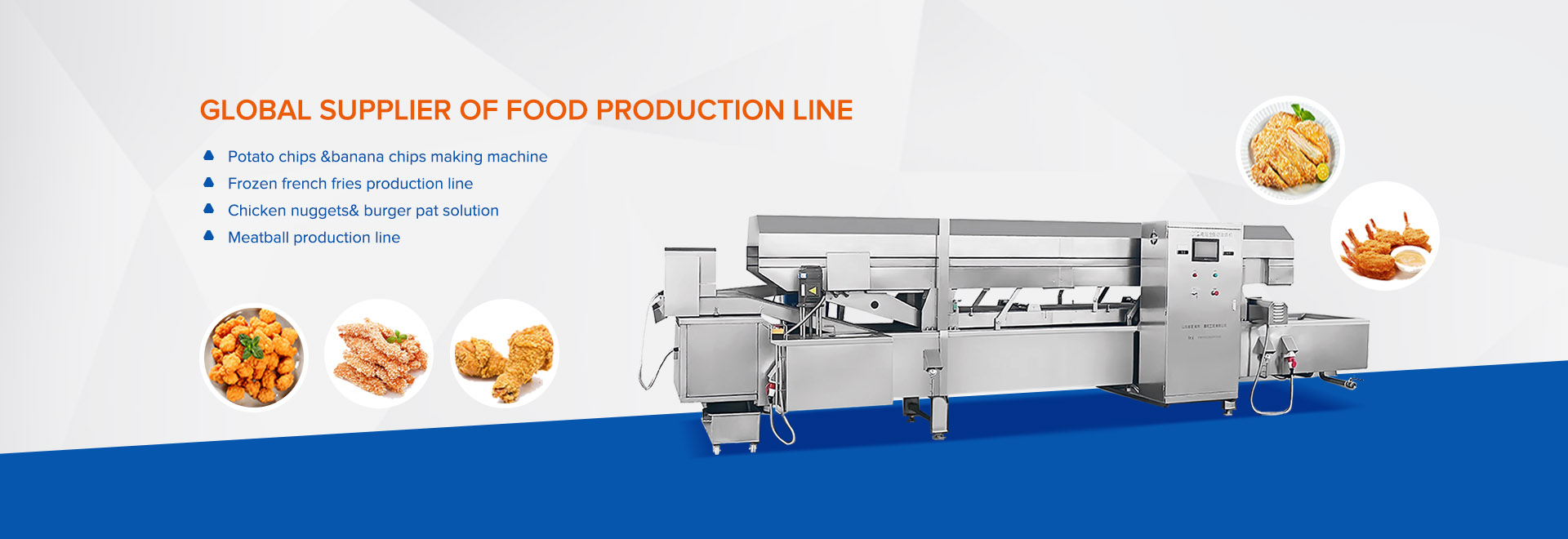



1. Core Materials: The Foundation of Food Safety and Durability
Deep-frying lines operate continuously in high-temperature, high-humidity environments, where material selection directly determines equipment longevity and food safety.
Food-grade 304 stainless steel must be used: The entire unit (including oil tank, mesh belt, and frame) should be constructed from SUS304 material, which offers strong corrosion resistance, withstands temperatures up to 600°C, and complies with national standards.
2. Temperature Control and Heating: The Key to Product Texture
Different products exhibit vastly different sensitivities to oil temperature, making temperature control precision the core metric distinguishing high-end from low-end equipment.
Precise Temperature Control (±1°C): For easily scorched products like fish fillets and crispy snacks, oil temperature deviation must be maintained within ±1°C to prevent burnt exteriors and undercooked interiors.
Heating Method Selection:
Electric Heating: Offers the most precise temperature control, ideal for high-quality products (e.g., premium potato chips, fish tofu), but carries relatively higher operating costs.
Gas/Coal: Suitable for high-volume products with less stringent temperature requirements. Lower cost but more challenging to control temperature.
Thermal Efficiency Optimization: Premium equipment features high-efficiency heat transfer devices and insulation design, extending frying oil lifespan by over 30% and reducing oil change frequency.
3. Mesh Belt Structure: Adapting to Different Product Shapes
The mesh belt serves as the “lifeline” for product conveyance. Incorrect selection can cause product accumulation, breakage, or uneven frying.
Type B Mesh Belt: Most commonly used, with excellent air permeability. Suitable for granular or block-shaped foods like French fries and peanuts.
Dual Mesh Belt/Pressure Belt Structure: Essential for low-density, buoyant products like fish fillets and spring rolls. Requires dual mesh belts or pressure belt attachments to force immersion in oil, ensuring uniform heating.
Variable Frequency Speed Control: Mesh belt speed must support stepless variable frequency adjustment, allowing frying times to be flexibly set between 15 seconds and 8 minutes to accommodate different processes.
4. Capacity Planning and Customization Recommendations
Avoid blindly pursuing large equipment; size should be calculated based on actual output.
Size Reference: Common mesh belt widths include 600mm, 800mm, and 1000mm; overall machine lengths range from 3.5m to 13.5m, requiring selection based on floor space and output.
Front-to-Back Integration: An efficient production line seamlessly connects processes like cutting, battering, coating, oil draining, and cooling into a closed-loop system, significantly reducing labor requirements.
Customization Lead Time: Standardized modular production typically requires 7-15 days, while non-standard equipment reliant on external procurement may take 20-30 days. Allow sufficient time accordingly.
Post time: Mar-12-2026